Historical
The Word That Arrived before the Machine
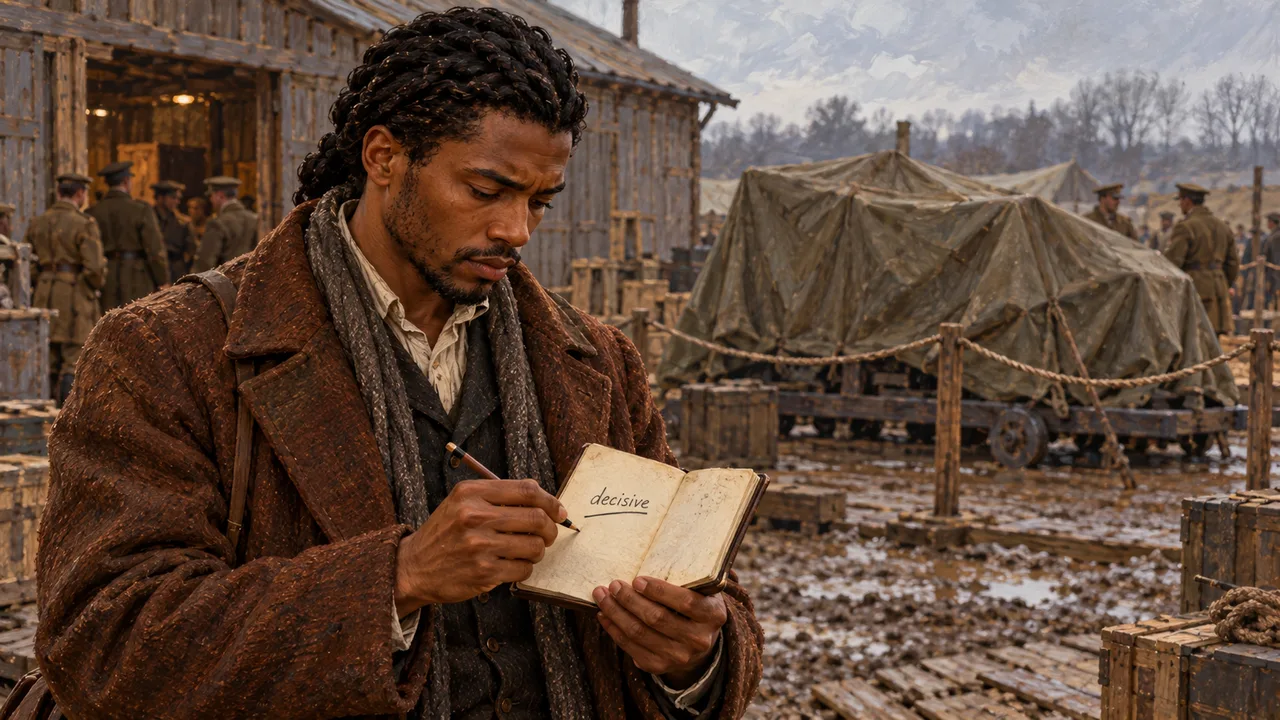
The official description calls it decisive. You write the word in your notebook, then draw a line beneath it rather than let it attach itself to anything you have actually seen. The demonstration is at a trial ground behind the front, far enough from the trenches that visitors speak more easily than the men who have returned from them. Captain Hale says your paper will want good news. You tell him it usually wants news first.
Your choices shape the journey
Choose an approach, work through a puzzle or skill check, and decide how to respond when the story asks something of you. Return to explore another ending.
This is a complete free adventure. Your progress stays in this browser; use the reader’s export option to keep a backup.
Before you begin
Period injustice, forced labour, slavery, dangerous work and war injury. Characters and incidents may be fictional.
No age rating or fixed reading-time promise has been assigned. Read the guide and content notes.
Historical context
This is a fictional local incident, not a claim that a hidden super-weapon or these people existed in 1917. The proposed device is an exaggerated publicity claim masking an unsafe demonstration. National Archives indexed guide text supports overlapping wartime news, censorship and propaganda bodies; IWM indexed exhibition text supports scrutiny of letters and telegrams. Direct source opens returned 403; substantive indexed text was read. A directly read parliamentary debate of 27 March 1917 supplies contemporary disagreement about operational censorship and political suppression; its speakers’ allegations are not treated as findings about this invented case. Fictional clearance decisions, press contacts and review arrangements are invented and do not assert a universal procedure.