Historical
The Small Sign after the Number
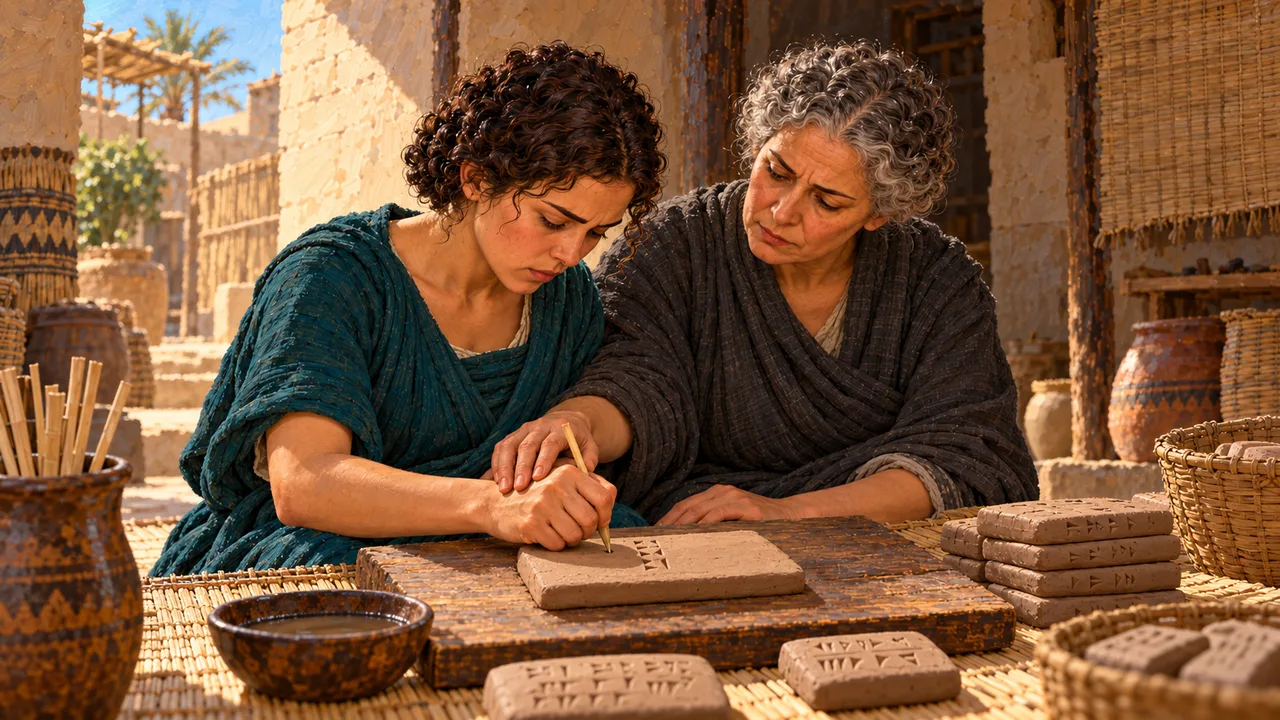
Your mother taught you to press a sign into clay by holding your wrist rather than guiding the stylus. “You must feel when the mark is yours,” Taram said. In Dagan’s household, where you now copy deliveries and debts, your hand is valued most when nobody notices whose it is. You have survived by making other people’s accounts legible. Taram still takes paid baking work. Her oven tools stand beside the jars of grain, earning smaller, less steady sums than Dagan pays you.
Your choices shape the journey
Choose an approach, work through a puzzle or skill check, and decide how to respond when the story asks something of you. Return to explore another ending.
This is a complete free adventure. Your progress stays in this browser; use the reader’s export option to keep a backup.
Before you begin
Period injustice, forced labour, slavery, dangerous work and war injury. Characters and incidents may be fictional.
No age rating or fixed reading-time promise has been assigned. Read the guide and content notes.
Historical context
All characters, debt amounts, release promise, private judgment, petition and outcomes are fictional. Belti is this invented household’s unusually trained female scribe, not evidence of a universal female occupation pattern. Louvre context places Hammurabi’s judgment collection around 1750 BCE and distinguishes it from a modern exhaustive code. The plot narrows the original universal-law suggestion to a disputed documented obligation affecting four adults. Met material context supports clay writing and the permanence firing can produce; the original instruction to burn clay tablets was adapted to destroying fresh drafts because burning could preserve them. No gameplay text is presented as a translation of an actual ancient provision.