Historical
The Photograph without the Hands
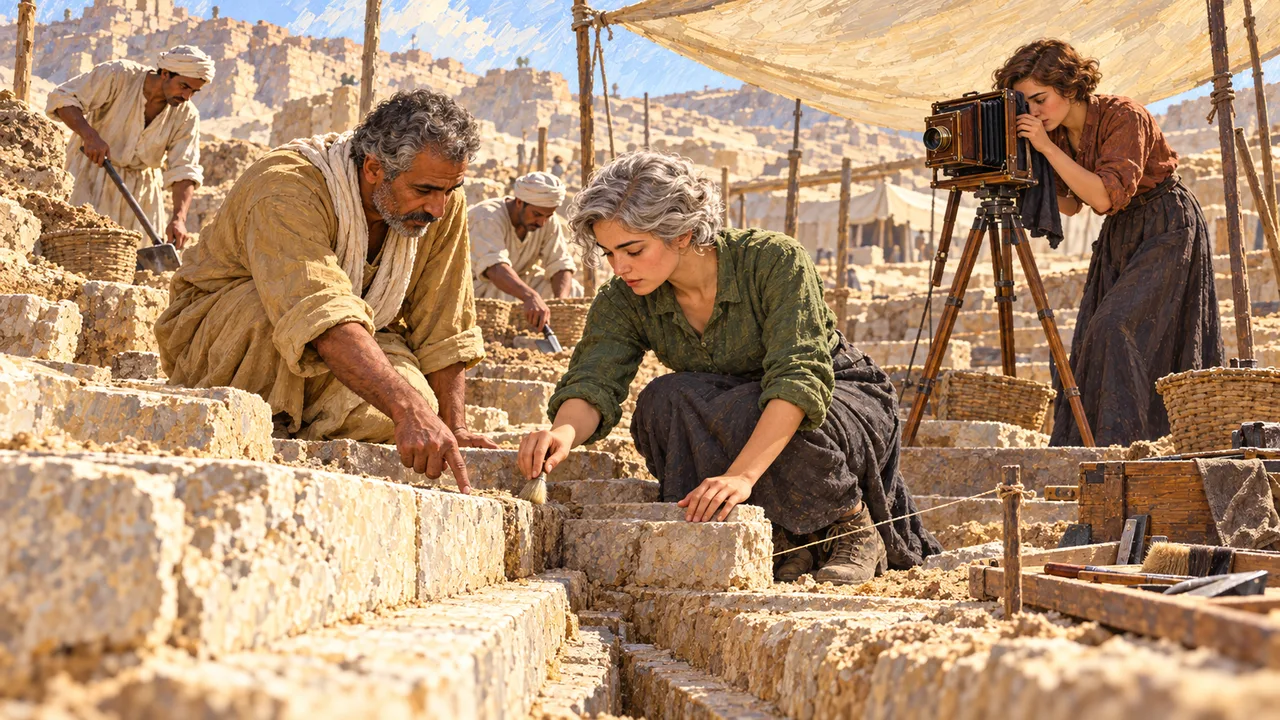
In Cairo, Price introduces you to a newspaperman as the woman who found a king. You have found a stair. Hassan found the first dressed stone while checking a drainage cut; Nadia’s photographs showed that the stair continued beneath rubble. The surviving royal fragment is too damaged to name anyone. By the time you correct the introduction, the newspaperman has written the better sentence.
Your choices shape the journey
Choose an approach, work through a puzzle or skill check, and decide how to respond when the story asks something of you. Return to explore another ending.
This is a complete free adventure. Your progress stays in this browser; use the reader’s export option to keep a backup.
Before you begin
Period injustice, forced labour, slavery, dangerous work and war injury. Characters and incidents may be fictional.
No age rating or fixed reading-time promise has been assigned. Read the guide and content notes.
Historical context
All protagonists, the site, inscriptions, permission arrangements and incidents are fictional. This is not Tutankhamun’s tomb or an invented episode in its actual excavation. The Met photograph supplies the narrow historical grounding that Egyptian foremen and skilled crews were indispensable and often uncredited. No inscription here is offered as an authentic translation, and no specific antiquities statute is asserted. Local stewardship and the negotiated custody of study material are this project’s arrangements.