Historical
The hand that came out whole
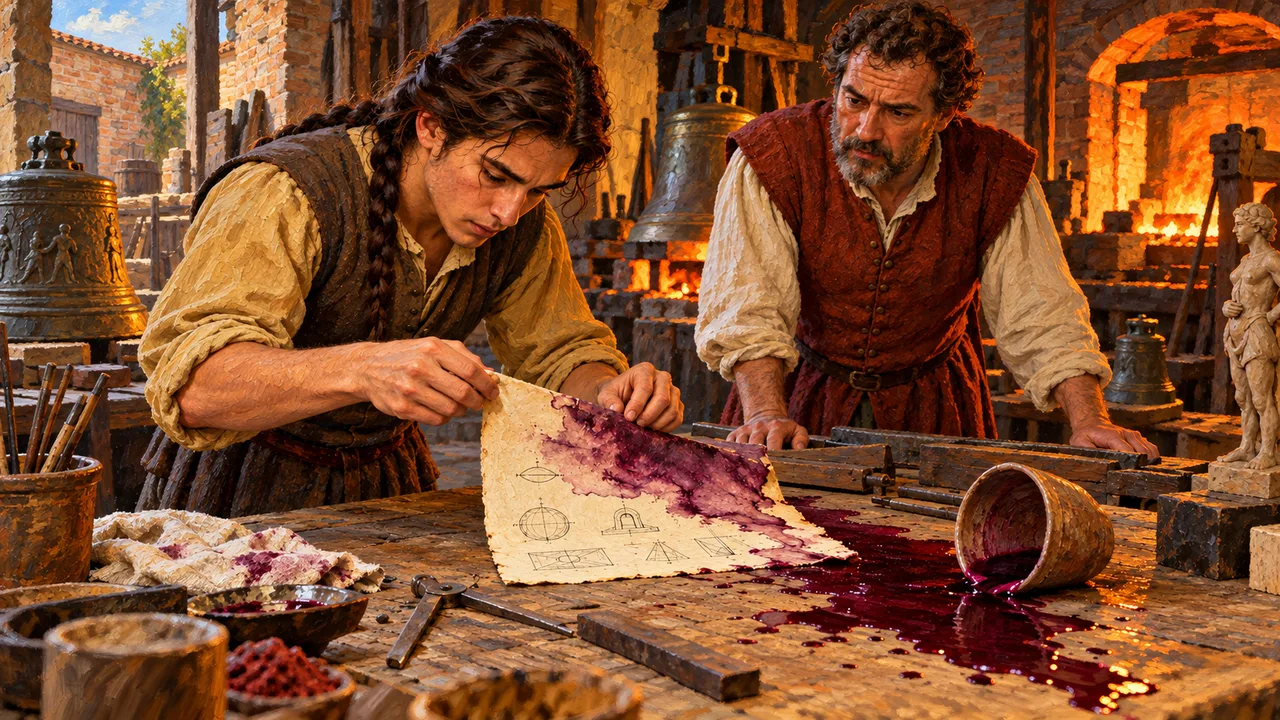
You find the promising formula because Luca spills wine on it. His grand heading dissolves into a purple cloud. The small figures beneath remain readable. You lift the page from his table before the stain reaches them, then pause with it halfway into your work book. Luca has written his name above measurements you kept while he slept.
Your choices shape the journey
Choose an approach, work through a puzzle or skill check, and decide how to respond when the story asks something of you. Return to explore another ending.
This is a complete free adventure. Your progress stays in this browser; use the reader’s export option to keep a backup.
Before you begin
Period injustice, forced labour, slavery, dangerous work and war injury. Characters and incidents may be fictional.
No age rating or fixed reading-time promise has been assigned. Read the guide and content notes.
Historical context
Mantua, 1498, supplies a Renaissance setting; the foundry, patron, named characters, commission, formula, tests, and disputes are invented. The Met source supports late-fifteenth-century Italian bronze patronage and the distinction between direct casting, which consumes its wax original, and indirect methods preserving an original model. No character here invents indirect casting or changes the recorded work of an actual artist. The formula’s ingredients and operating details are deliberately unspecified; its abstract test marks are fictional evidence rather than a practical casting recipe. Later archive annotations connect the reader’s records without claiming Matteo knew Yusuf or that a single guild operated across centuries.