Historical
The Hand on the Table
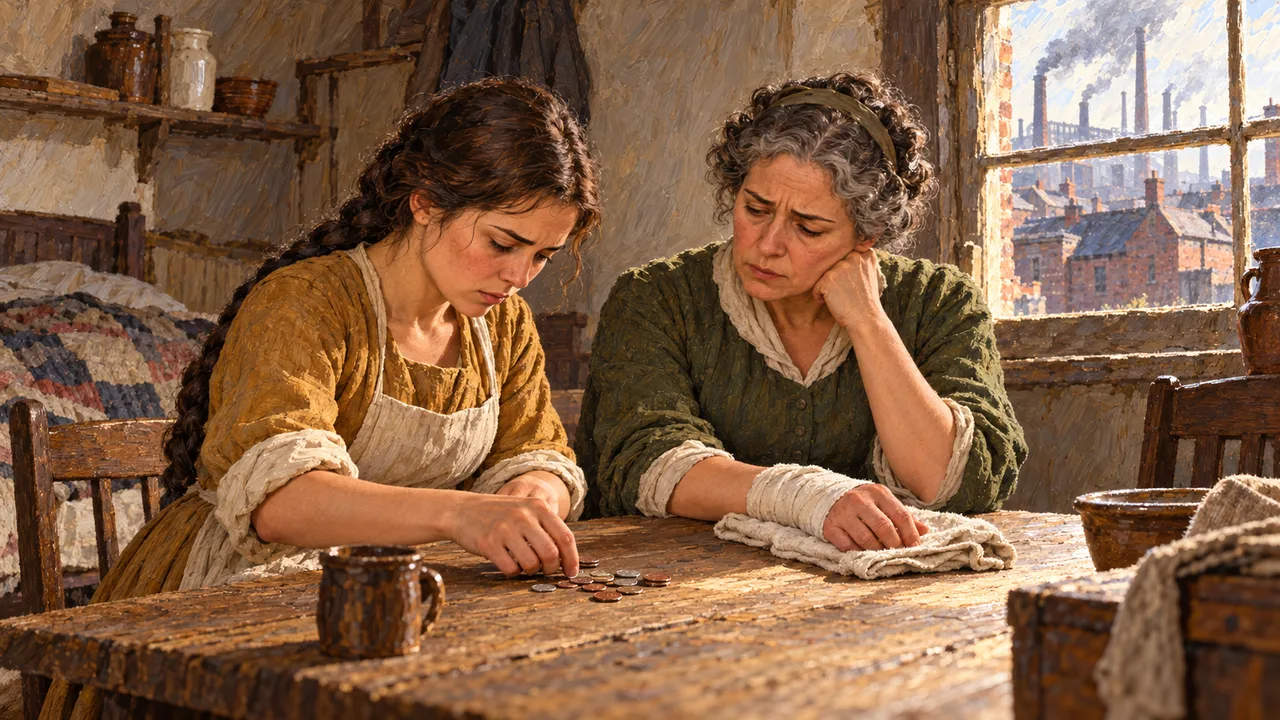
Your mother rests her injured hand on a folded cloth while you count the week’s coins. Agnes used to count them herself. Now she cannot separate two copper pieces without pain and becomes angry when you move to help. The mill’s exposed drive caught her sleeve three weeks ago. Pike stopped the machinery; everyone says it could have been worse, as though a greater injury would make this one reasonable.
Your choices shape the journey
Choose an approach, work through a puzzle or skill check, and decide how to respond when the story asks something of you. Return to explore another ending.
This is a complete free adventure. Your progress stays in this browser; use the reader’s export option to keep a backup.
Before you begin
Period injustice, forced labour, slavery, dangerous work and war injury. Characters and incidents may be fictional.
No age rating or fixed reading-time promise has been assigned. Read the guide and content notes.
Historical context
Alder Mill, all named people, injury, machinery records and local settlements are invented. August 1842 stoppages around Manchester and the connection between wage demands and the People’s Charter are grounded in National Archives source extracts. The contemporary newspaper uses hostile language; that is a historical observer’s position, not this narrator’s judgment. The six-point Charter sought votes for adult men, not universal suffrage as understood today. No real leader is made responsible for the fictional sabotage. The lesson web pages returned 403 on direct opening. The National Archives lesson PDF was read directly, including its source transcripts; no claim is made to have examined the complete original newspaper.