Historical
The blank beside the count
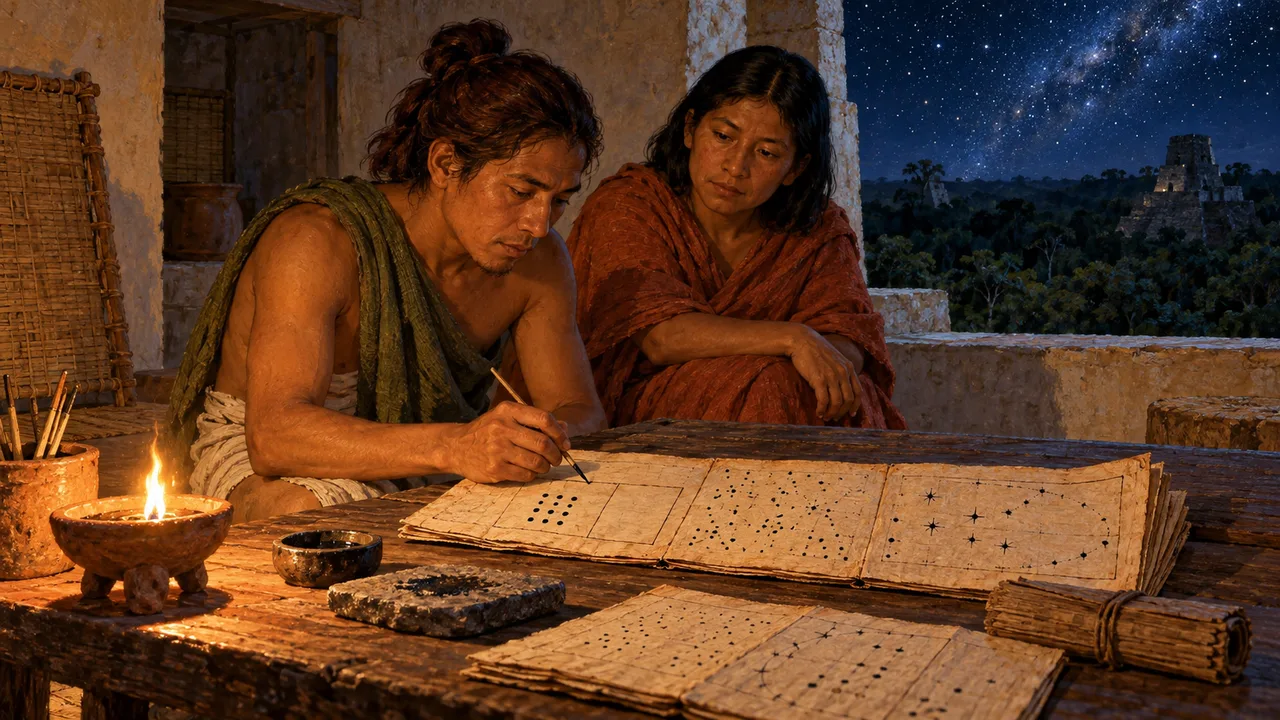
Sak leaves a blank beside the count you most want to finish. You ask whether a number was lost. “No. That is where the next observer can show I was wrong.” You have copied her sky book for eleven years. Tonight you suspect she is leaving you the particular pleasure of filling it, and dislike how well she knows what you want.
Your choices shape the journey
Choose an approach, work through a puzzle or skill check, and decide how to respond when the story asks something of you. Return to explore another ending.
This is a complete free adventure. Your progress stays in this browser; use the reader’s export option to keep a backup.
Before you begin
Period injustice, forced labour, slavery, dangerous work and war injury. Characters and incidents may be fictional.
No age rating or fixed reading-time promise has been assigned. Read the guide and content notes.
Historical context
The SLUB Dresden description supports the coexistence of calendrical, astronomical, and religious interpretation in a surviving Maya manuscript. This story invents two local communities and their immediate dispute around 1400; it makes no claim to a verified eclipse on a particular historical date or to an actual interstate treaty. The named people and observation figures are fictional, with English-rendered names used for reader clarity. The local book is not the Dresden manuscript itself. Maya communities are living human societies here, with work, family, disagreement, and religious practice; they are not a vanished mystical race. Later archive comments are explicitly external to the period narration.